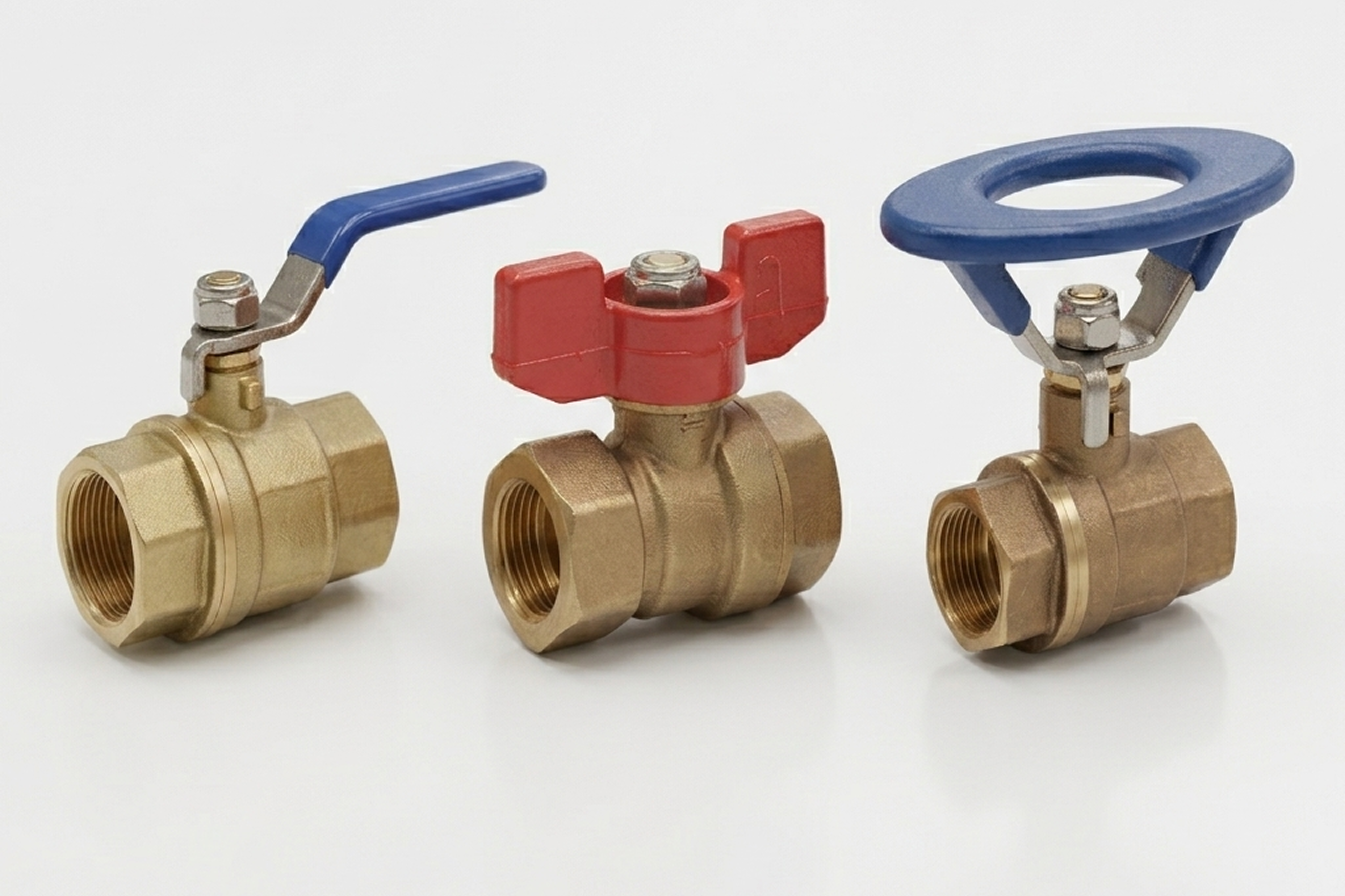
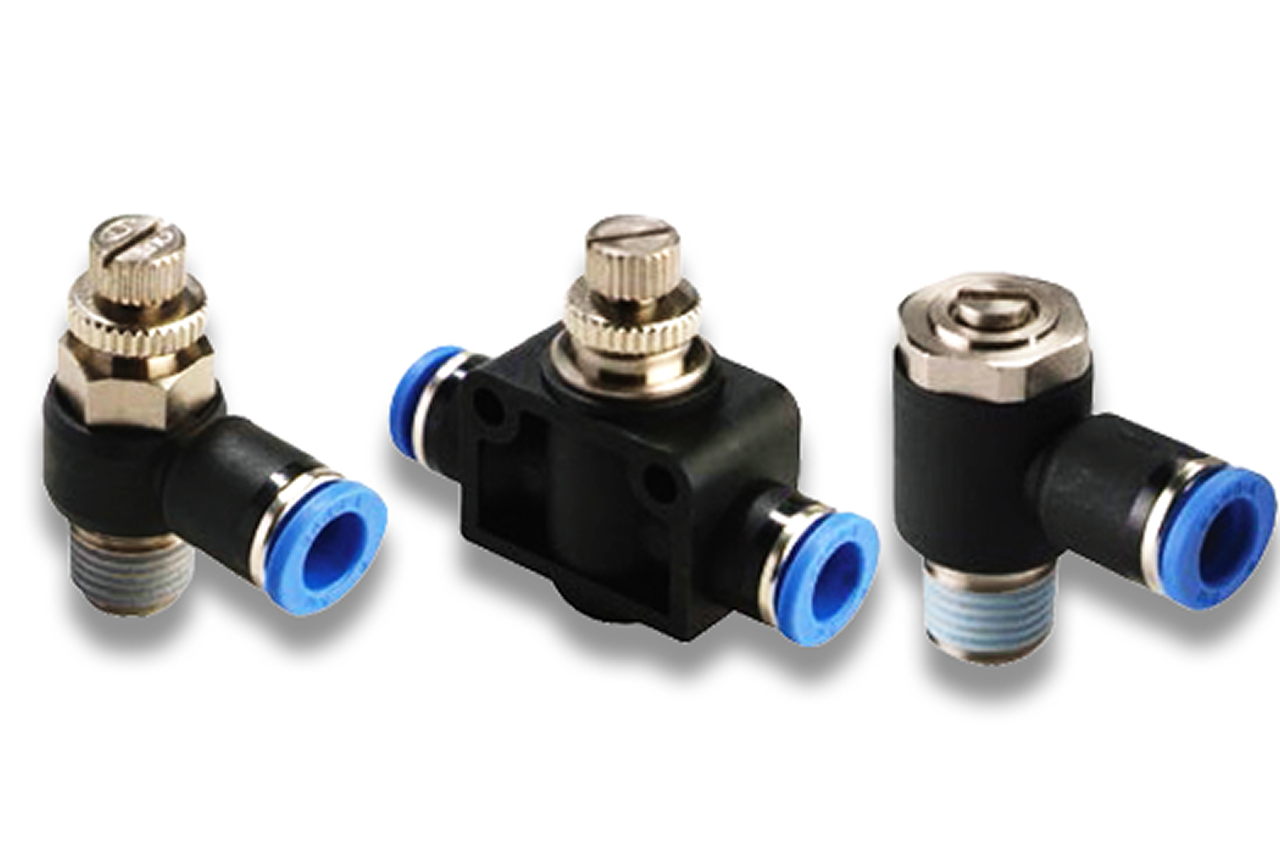
DISTRIBUTOR-FIRST SUPPLY PARTNER · SINCE 1999 Live · Pneumatic Automation System

SPC Company
Pneumatic Automation / Control & Valving / Manual & Shutoff Valves / Ball Valve
Layer 03 · Control & Valving Value · SPC OEM
What it is

Ball Valve

A ball valve is a manual quarter-turn on/off isolation valve — a bored ball inside the body rotates 90° from fully open (bore aligned with the line) to fully closed (bore crossways). It is the workhorse line-isolation point in a compressed-air or fluid system: the lever turned crossways drops the downstream branch dead so a tech can break a union, swap a regulator, or service a tool without bleeding the whole header. Its defining traits are a forged-brass (or stainless) threaded body, a full-port bore that flows the line's full capacity when open, and a lever with a padlock provision for OSHA lockout-tagout. It is on/off only — never a throttle — and it hard-pipes into a threaded run (NPT/BSPP) rather than seating tube the way a push-to-connect valve does. It is the lockable service-and-isolation valve every drop, branch, and equipment tie-in should carry, and is sold and quoted as a separate SKU. Distinct from the two siblings: the 1/4-turn shutoff valve is the same family pitched specifically as the point-of-use FRL-drop accessory; the PTC ball valve is the tubing-native push-to-connect version. This is the general-purpose threaded brass/stainless ball valve across the full size range, air or water.
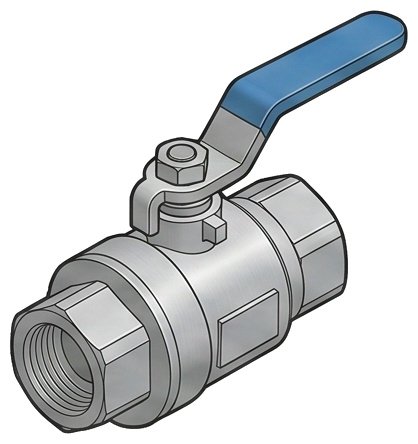
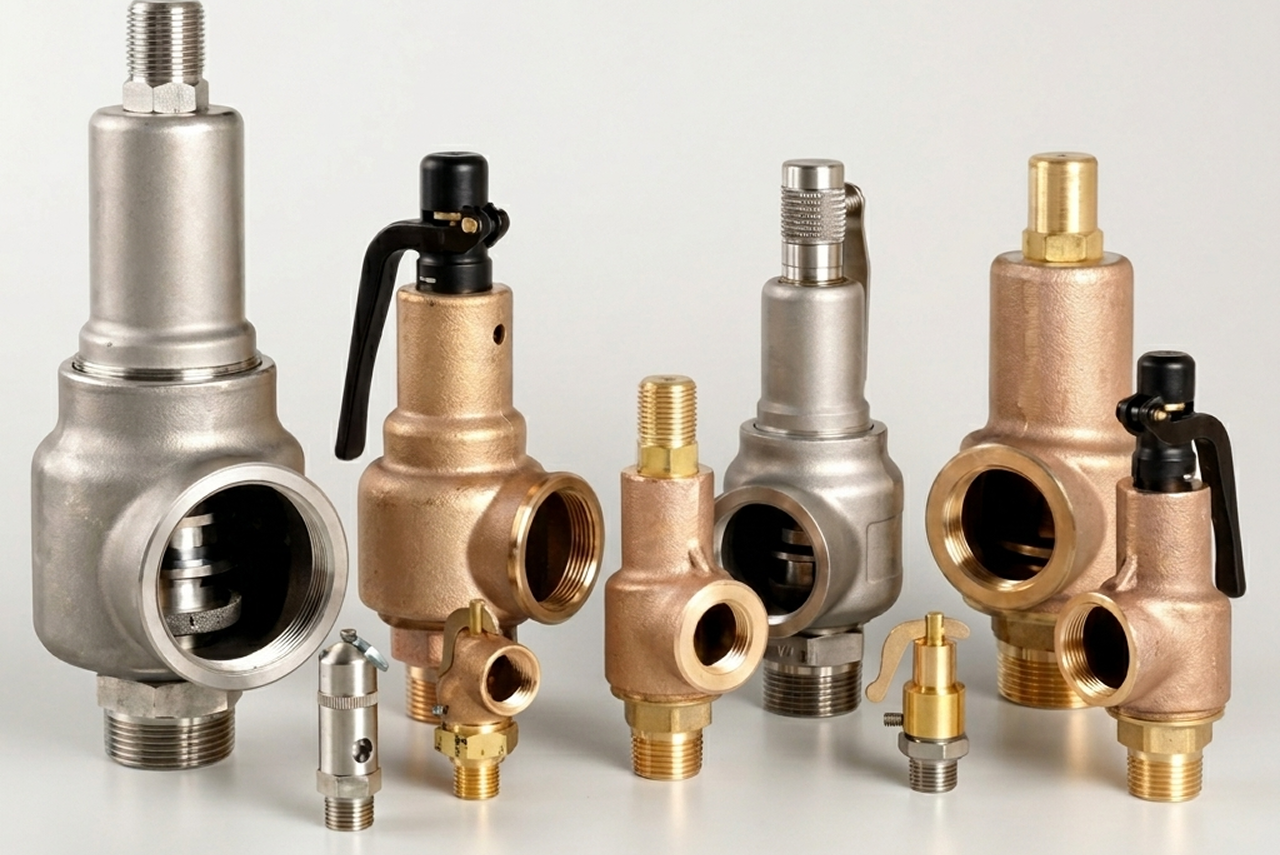
Pictorial Representative ball valve
Ball Valve — representative illustration
Where it's used General Manufacturing
General Manufacturing application
Why it's needed

Why this matters.

Tips and pointers on when the threaded ball valve is the right call — and when to spec something else. Scroll the strip →

01 · Key point
Isolates in one motion of a lever.

A quarter turn swings the lever from open to closed — parallel to the pipe = open, crossways = closed, unmistakable at a glance. The downstream branch drops dead for service while the upstream header stays live. The cheapest, most-used isolation device in the plant.

02 · Key point
Padlock hole is the LOTO standard.

The hole in the lever takes a standard OSHA padlock — the valve IS the lockout device at every drop, branch take-off, and equipment tie-in. Confirm the lever has the hole; economy levers sometimes omit it and a no-hole valve fails the LOTO audit.

03 · Key point
Full-port flows the whole line.

A full-port ball valve''s bore equals the nominal pipe size — open, it''s not in the way. A cheaper standard-port valve has a smaller bore and a mild restriction. On continuous-flow critical lines spec full-port; on occasional-service drops standard-port is fine.

04 · Pro tip
Match body material to environment.

Forged brass for general industrial air, oil, gas, and water. Stainless for washdown, food, pharma, corrosive, or outdoor. Brass in washdown corrodes within 6-12 months — the cost delta to stainless is modest, the failure cost is high. Potable water needs a lead-free body.

05 · Where not to use
Tunable flow throttling.

A ball valve is on/off — partial-open positions erode the seat and give non-repeatable flow. → Re-spec to flow control valve for bidirectional line throttling, or a speed controller for one-direction cylinder metering. Run a ball valve fully open or fully closed, never in between.

06 · Where not to use
Automatic backflow blocking.

A ball valve is manual and bidirectional when open — it doesn''t block reverse flow on its own. → Re-spec to check valve when the job is automatic one-way protection. The two often pair in series on a compressor discharge line (check + ball valve).

07 · Where not to use
Tubing-native or tool-less install.

This is the hard-piped, threaded valve. On a push-to-connect tubing system, threading it in means cutting and re-plumbing the run. → Re-spec to PTC Ball Valve for tool-less tubing isolation, or the 1/4-turn shutoff valve when the pitch is specifically the point-of-use FRL-drop accessory.

Key selection criteria

What we need to spec it right.

From the machine spec sheet to the part number. Answer what you know, leave the rest blank, and send.

Answer what you know, leave the rest blank, and send. Need different sizes, colors, or quantities? Configure, add to quote, then configure again. Each click is one quote line.

04Choose your priority  ·  core differentiator

Whatever your lever — performance, value, or price — SPC has the right brand.

Pick the priority; the quote desk handles the cross-reference.

02 Value 1 brand
05How to sell this  ·  distributor talk track

The tier conversation closes the deal. The cross-reference catalog wins the next one.

A ball valve is rarely one sale — it is an audit. Walk the plant and count the drops, branches, and tie-ins that can't be isolated. Each one is a quote line, and most plants are dramatically under-equipped.
The SPC difference · how distributors actually buy

The 30-second positioning

Quoting is a quantity conversation more than a spec conversation. Every machine drop, every branch take-off from a header, every equipment tie-in (dryer, receiver, aftercooler) should be isolatable. Size to the line — a 1/2" drop gets a 1/2" valve, a 2" header take-off gets a 2" valve — and pick full-port on anything that carries continuous flow.

Tier: Economical tier is the value default — full size coverage (1/4"–4"), forged brass, blow-out-proof stem, padlock-hole lever, UL/CSA/FM listings, competitive on the high-volume sizes. Industry Leader tier for matched-vendor installations where the rest of the pneumatic train is single-brand. Stainless is a material call, not a tier call — spec it wherever the environment demands it regardless of tier.

The most consultative move is the plant walk. Most plants are under-equipped on isolation because the original install cut corners. A walk-through or a look at the pneumatic schematic surfaces 10-50 missing isolation points across drops and branches. The total quote becomes substantial, the per-unit cost is low, and the operational case (service without an air-down, OSHA LOTO compliance) is easy to make.

The two siblings, said plainly: the 1/4-turn shutoff valve is this same family pitched as the point-of-use FRL-drop accessory; the PTC ball valve is the push-to-connect tubing version. Lead a customer to the right one by the install (hard pipe vs. tubing) and the pitch (general isolation vs. FRL-drop vs. tubing skid).

The material call is non-negotiable. Brass in washdown, chemical wash, or chlorinated-cleaning environments corrodes within a year. Stainless costs modestly more and survives. For potable water, the standard brass body is not lead-free — spec an NSF/ANSI 372 lead-free body.

Customer cue → talk move

""Where should I put shutoffs on my plant?""
Every machine drop, every branch take-off, every equipment tie-in. Walk the schematic; the missing isolation points are obvious and add up fast.
""Just need one to isolate an FRL drop""
Quote matched size; mention the rest-of-plant audit. If the customer thinks of it specifically as the FRL-drop part, the 1/4-turn shutoff valve is the same valve framed that way.
""Need to lock out an air drop for OSHA""
The lever's padlock hole IS the LOTO standard. Confirm the hole, quote a padlock if the plant doesn't stock one.
""Washdown / food / pharma line""
Stainless ONLY. Brass corrodes within a year. Price delta is small; failure and audit cost is high.
""Potable-water tie-in""
Lead-free (NSF/ANSI 372) body. Standard forged brass is not lead-free and fails the potable spec.
""It's a push-to-connect tubing machine""
Re-spec to the PTC Ball Valve — tool-less, drops straight into the tubing run. Threading a brass valve in means cutting and re-plumbing.
""Want to dial the flow partway""
Ball valves are on/off only; partial-open wears the seat. Re-spec to a flow control valve for throttling.
""Old ball valve leaking through the lever; can it be repaired?""
Almost never field-repairable at the commodity price point. Replace. Recurring leaks at one spot point at upstream air quality or wrong material.
Where it's used

Industries served.

Each industry below uses this product across the listed areas. Open an industry to see how it fits the rest of its system.

Also applies to Every machine drop in a working pneumatic plant. · Branch take-offs from main headers. · Equipment service isolation. · Receiver-tank drain and bypass. · New installation and machine relocation. · Washdown, food, and pharma (stainless).

Install · 6 critical steps

The things that matter on the first install.

Step 01
Match size and port style to the line
Nominal port size equals the upstream pipe size. Decide full-port vs. standard-port: full-port's bore equals the line and adds no restriction; standard-port is cheaper with a smaller bore — fine on occasional-service drops, but spec full-port (or one size up) on continuous-flow critical lines.
Step 02
Install where the lever can be reached and swung
The lever needs a clear 90° arc without a ladder or removing adjacent equipment. Most ball valves let the body be rotated within the pipe threads before final tightening — set the lever orientation before locking the joint. For an FRL drop, the valve goes between the branch take-off and the FRL inlet so the FRL itself can be serviced with the valve closed.
Step 03
Thread sealant by thread type
NPT = PTFE tape on the male thread, 2-3 wraps in the direction of engagement (or pipe dope). BSPP seals on the face — no sealant on the threads. Mixed-metal joints (brass valve on galvanized or steel pipe) have differential thermal expansion that can loosen the joint over temperature cycling — re-check torque at the 6-month service on a temperature-cycled line.
Step 04
Do not over-torque, and never wrench on the body casting near the ball
Tighten on the wrench flats only. Over-torquing a brass body can distort the bore and bind the ball; wrenching on the wrong section can crack the casting. The blow-out-proof stem protects against stem ejection — it does not protect against an over-torqued body.
Step 05
Engage the padlock provision if LOTO is required
Verify the lever has the padlock hole and that the plant's LOTO padlock fits (some economy levers have an undersized hole). Add the valve to the written lockout procedure — most plants reference specific isolation points by location, and an un-documented valve doesn't satisfy the audit.
Step 06
Cycle fully open and fully closed at commissioning
Verify the lever moves smoothly through the full quarter turn and that closed fully isolates downstream — downstream pressure should drop to zero when the valve is closed and the downstream is vented. A sticky lever on a new install usually means corrosion or install contamination; flush and re-test, or replace if it doesn't free up.
Troubleshoot · top failures

Most returns trace to one of these causes.

Symptom
Most likely cause
Fix
Lever sticks or is hard to turn
Corrosion inside the ball or stem (most common on brass in washdown or wet air), or mineral scale from contaminated compressed air, or mechanical damage from someone using a pipe extension on the lever as a leverage tool.
Work the lever gently through several partial cycles to free it. If it frees up, the valve is salvageable in low-criticality service but schedule replacement. If not, replace. Never force a stuck lever with extension tools — a broken stem is a sealing and contamination hazard.
Valve leaks through the body even when fully closed
Damaged PTFE ball seat (most common after years of service or a single high-particulate event), or a damaged stem seal/packing, or a cracked body from thermal cycling, freeze damage, or an over-torqued install.
Almost never field-repairable on commodity ball valves — replace. Recurring failures at one location point at upstream air quality (check the coalescing filter) or wrong material for the service.
Downstream pressure does not drop to zero when the valve is closed
Lever not fully closed (stops short of 90°), or a leaking ball seat, or another supply path downstream that this valve isn't isolating.
Verify the lever is at exactly 90°. If the seat is passing, replace. If another supply path exists, trace the downstream plumbing — a multi-supply branch needs a valve on each feed.
Restricted flow even with the valve fully open
A standard-port valve's smaller bore on a continuous-flow line (the bore is below the nominal line size), or a valve sized below the line, or the valve being run partly-closed as a throttle.
Spec a full-port valve matched to the line (or one size up on standard-port) for continuous flow. Run the valve fully open or fully closed only. If the application genuinely needs metered flow, re-spec to a flow control valve.
Brass valve corroded after less than a year in service
Wrong material for the environment. Brass corrodes in washdown, in chemical environments, and where chlorine-based cleaning chemicals are used.
Replace with stainless steel. The brass-to-stainless cost delta is modest; long-term reliability and audit-cleanliness are substantial.
Lever was hit and bent or broke off
Physical damage from a passing forklift, a swinging hoist load, or someone using the lever as a hand-hold.
Replace — a bent lever can't be reliably operated and a broken-off stem is a sealing hazard. Relocate to a less-exposed position or add a protective guard on future installs in high-traffic areas.

Get the right ball valve on quote in 24 hours.

Send us the application — a specialist routes you to the correct tier with a configured part. Lead-times and pricing returned within one business day.

Request a quote