DISTRIBUTOR-FIRST SUPPLY PARTNER · SINCE 1999 Live · Pneumatic Automation System

SPC Company
Pneumatic Automation / Control & Valving / Directional Control Valves / Manifold / Sub-base Valve
Layer 03 · Control & Valving Performance · SMC Value · AIGNEP
What it is

Manifold / Sub-base Valve

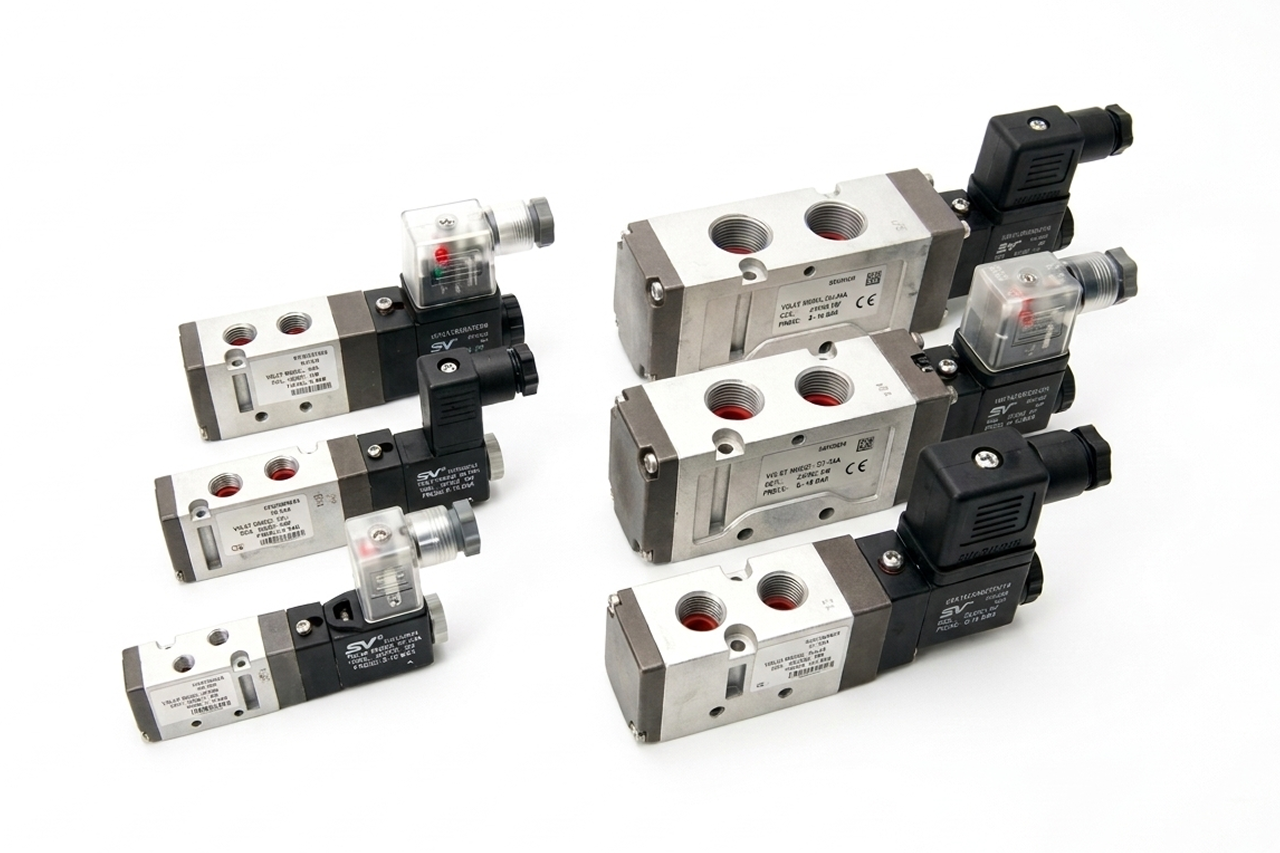
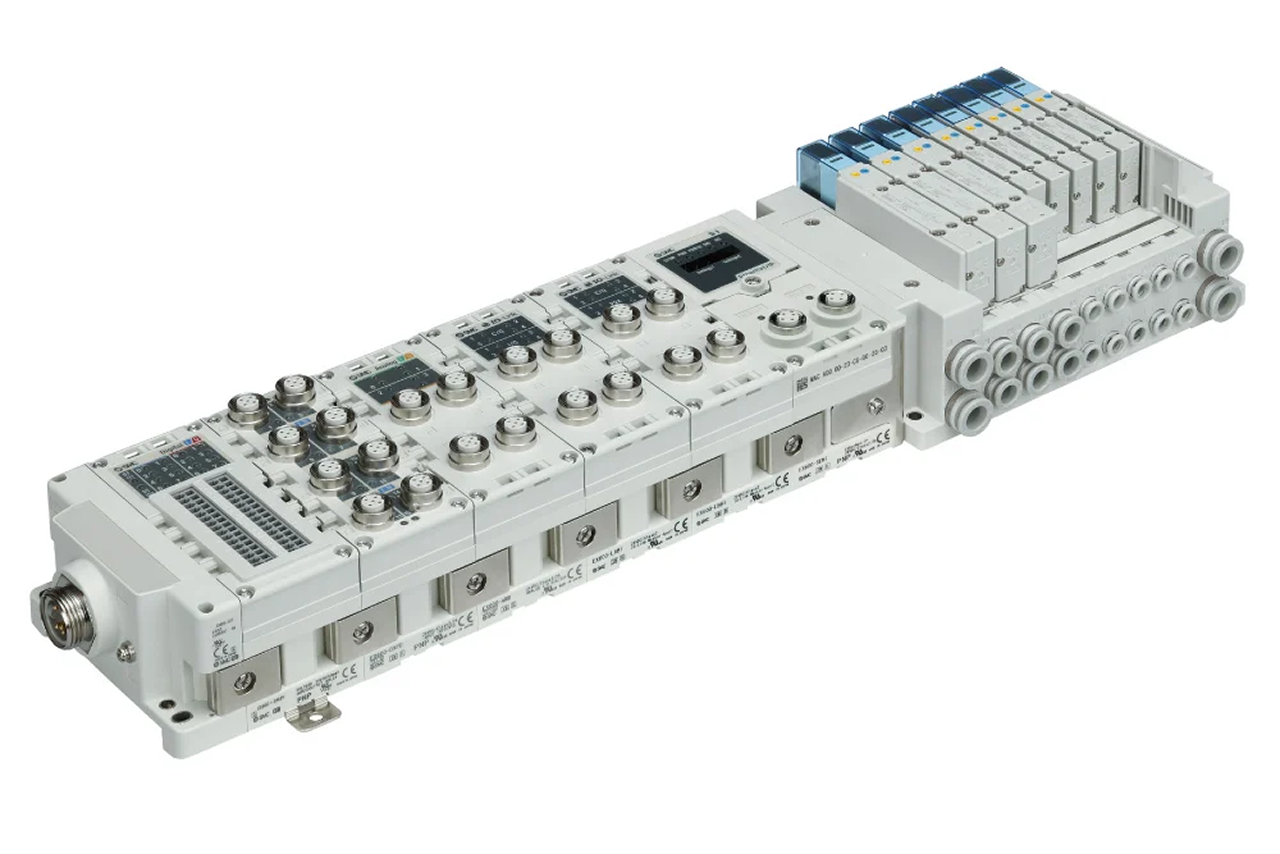
A manifold / sub-base valve is a directional control valve built to bolt onto a shared base that distributes one air supply and one common exhaust to every valve station. It is the standard construction for any machine running more than two or three cylinders — packaging lines, assembly cells, robotic systems — because individual loose solenoid valves stop scaling once the fitting and wiring count multiply. One supply line into the base, individual cylinder hoses off each station, and one or two shared exhausts. A single base mixes 5/2 single, 5/2 double, 5/3, and 3/2 stations side by side so one manifold serves a machine whose cylinders each behave differently.
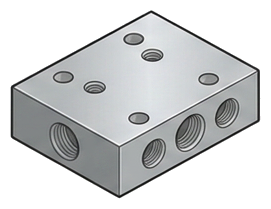
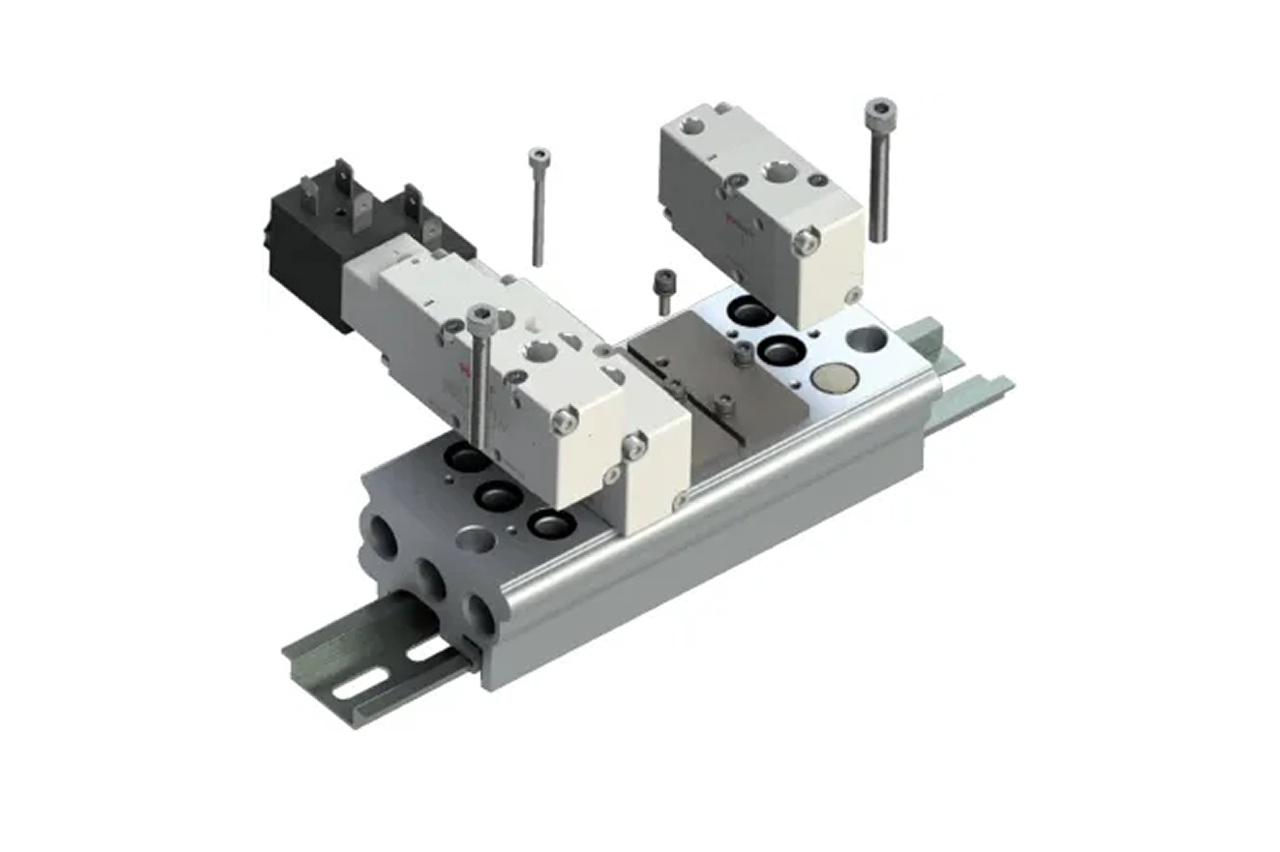
Pictorial Representative manifold / sub-base valve
Manifold / Sub-base Valve — representative illustration
Real-world reference Representative manifold / sub-base valve
Manifold / Sub-base Valve — representative product photo
Why it's needed

Why this matters.

Tips and pointers on when the sub-base manifold is the right call — and when to spec something else. Scroll the strip →

01 · Key point
Shared supply, shared exhaust.

One supply line into the base feeds every station; one or two shared exhausts replace per-valve mufflers. Plumbing drops from 16 lines to one on a 16-valve machine; cabinet space shrinks roughly half.

02 · Key point
One multi-pin connector wires the bank.

D-sub or ribbon cable replaces 16 wire pairs — terminal count drops 80–90%. Failed station lifts off the base in seconds without disturbing supply, exhaust, or adjacent wiring. Service goes from "line down" to "swap and restart."

03 · Key point
ISO 5599/15407 breaks lock-in.

Bases built to the ISO standard accept valves from any conforming manufacturer. Any ISO-compliant valve swaps for another on the same base — no manufacturer lock-in, no re-piping. Mixed function codes (5/2 single, 5/2 double, 5/3, 3/2) on one base is standard.

04 · Pro tip
Size supply to simultaneous flow.

Sum per-station Cv across all valves that can fire simultaneously — not per-station. Undersized supply causes manifold pressure droop on burst events; every cylinder slows together. Same logic for the shared exhaust. Plan 20% spare stations on fixed-length bases.

05 · Where not to use
Only 1–2 cylinders on the machine.

Manifold overhead doesn't pay back at that scale — base cost, mounting space, and shared-port plumbing exceed the value of consolidation. → Re-spec to inline solenoid valves below 3 cylinders.

06 · Where not to use
Smart-factory IIoT initiative.

A conventional manifold has no per-valve cycle count, no coil-current monitoring, no fieldbus integration — the diagnostic data is invisible. → Step up to IO-Link valve terminal. Same ISO base can field-upgrade later by swapping the gateway module.

07 · Where not to use
Classified hazardous areas.

Hazardous-area manifolds exist but are uncommon — most ATEX installs are inline single valves at each cylinder. → Re-spec to ATEX solenoid for each cylinder station in a Class/Division or ATEX-zone area.

Key selection criteria

What we need to spec it right.

From the machine spec sheet to the part number. Answer what you know, leave the rest blank, and send.

Answer what you know, leave the rest blank, and send. Need different sizes, colors, or quantities? Configure, add to quote, then configure again. Each click is one quote line.

04Choose your priority  ·  core differentiator

Whatever your lever — performance, value, or price — SPC has the right brand.

Pick the priority; the quote desk handles the cross-reference.

01 Performance 1 brand
02 Value 1 brand
05How to sell this  ·  distributor talk track

The tier conversation closes the deal. The cross-reference catalog wins the next one.

The manifold conversation is the labor-savings conversation. The customer is not buying valves; they are buying a wiring loom, a plumbing diagram, and a service plan that costs less.
The SPC difference · how distributors actually buy

The 30-second positioning

Start with station count and per-station function code. 2 to 24 stations on one base is typical. Per station, function follows the controlled cylinder — 5/2 single (spring-return-to-safe), 5/2 double (memory), 5/3 (closed/open/pressure center), 3/2 (single-acting). Mixed function codes on one base is standard.

Tier: Industry Leader tier is the integrator default for new OEM builds — highest-density and widest-coverage platforms on the market, native integration with IO-Link gateway portfolios. Emerging tier is the cross-brand value tier — ISO 5599/15407 compliant, drops onto a standardized base, 10–25M cycle life. Economical lines exist but defeat the cross-brand interchange that makes manifolds attractive.

The supply/exhaust sizing miss is the diagnostic call. Sum per-station Cv across all valves that can fire simultaneously; size supply and exhaust to that total, not per-station. Undersized supply causes manifold pressure droop and erratic cylinder motion on every station — a confusing fault that points everywhere except at the manifold inlet.

The IIoT pivot — surface even when the customer is not buying it today. Every sub-base manifold is a future IO-Link upgrade. Quote the manifold + mention the gateway-module path as a one-line in the proposal. Customers buying the wiring savings today often come back 1–3 years later for the smart-factory upgrade. Start the conversation now; the customer's budget cycle does the rest.

Customer cue → talk move

""Machine with 8 cylinders, currently loose individual valves""
Pitch the manifold conversion. Quantify labor savings (fitting count drops ~32 to ~10, wiring drops 16 pairs to 1 multi-pin) and cabinet-space saving. Most retrofits pay back the manifold cost in install labor on the first project.
""New OEM build, 12 valves needed""
Sub-base manifold (Industry Leader or Emerging tier) as line 1. Spec the base for 14–16 stations to leave room for expansion. Mention the IO-Link upgrade path.
""Plant moving toward smart-factory diagnostics""
Pivot to IO-Link Valve Terminal. Quote both the sub-base manifold and the IO-Link variant on the same RFQ so the customer sees the cost delta and diagnostic value side by side.
""Replace a 20-year-old manifold""
If the existing manifold is ISO 5599 / 15407 compliant, any compliant brand drops onto it — no need to replace the base. If proprietary, the question becomes "replace base + valves as one SKU" vs. "cross-reference within the same manufacturer."
""Field-expansion likely within 2 years""
Modular stacking over fixed-length. The cost premium per station is worth the optionality. Alternative is over-ordering stations on the initial fixed base.
""Pressure droop during fast simultaneous firing""
Check supply port sizing against total simultaneous flow. Re-pipe the supply with the next pipe size up, or install a small accumulator at the manifold inlet.
Where it's used

Industries served.

Each industry below uses this product across the listed areas. Open an industry to see how it fits the rest of its system.

Also applies to OEM automation — the standard for multi-cylinder machines. · Existing machine modernization. · Test stands and lab equipment.

Install · 6 critical steps

The things that matter on the first install.

Step 01
Size the supply port and supply line to total simultaneous flow
Sum per-station Cv across all valves that can fire simultaneously, derate for operating pressure, and confirm the supply line and supply port deliver that flow with pressure drop under ~5 PSI. Undersized supply causes manifold pressure droop during burst events — every cylinder on the manifold slows simultaneously, and line cycle time degrades.
Step 02
Size the exhaust port and exhaust muffler
Same logic. The shared exhaust must clear total simultaneous exhaust flow without back-pressure. Undersized exhaust slows cylinder return strokes and can leave residual pressure in cylinder chambers between cycles, causing soft motion.
Step 03
Mount with service access on every station
Each valve station should lift off the base without removing adjacent valves or wiring. Standard orientation: supply at the bottom, exhaust at the top, valves accessible from the front. Mounting the manifold in a corner of the cabinet or behind other components defeats the serviceability — re-route other components to give the manifold front access.
Step 04
Wire the multi-pin connector with strain relief and labeled tags
The multi-pin or ribbon cable is the single point of electrical failure for the entire manifold. Strain-relief at the manifold and the cabinet wall; label both ends with the station-to-output mapping; verify wiring against the manifold's pin diagram BEFORE applying power. A reversed wire pair shifts one valve when an adjacent station is commanded — a confusing fault to chase if the wiring is unlabeled.
Step 05
Set each station's manual override and verify cycle
Each station has a manual override. Use it during commissioning to verify each station is plumbed to the correct cylinder before applying PLC commands. Catch crossed-plumbing on the bench, not after wiring the PLC and discovering cylinder 4 fires when station 2 is commanded.
Step 06
Document the spare-station population
Fixed-length manifolds typically ship with all stations populated; modular bases may ship with blanking plates on spare positions. Document the spare-station plan in the machine build file so the field-expansion path is clear to the maintenance team years later.
Troubleshoot · top failures

Most returns trace to one of these causes.

Symptom
Most likely cause
Fix
All cylinders on the manifold slow simultaneously during fast cycling
Manifold supply undersized for simultaneous flow demand (most common), or supply line upstream undersized, or the regulator feeding the manifold cannot keep up with burst demand.
Measure supply pressure at the manifold inlet during the burst event — a pressure gauge captures the droop. If pressure drops below the pilot minimum (~25 PSI), the valves themselves stop shifting reliably. Step up the supply line, the manifold supply port, or add an accumulator at the manifold inlet.
One station does not actuate; adjacent stations work fine
Coil failure on that station, or wiring break or wrong-pin assignment at the multi-pin connector, or mechanical jam on that valve's spool, or damaged O-ring on the valve's base interface causing internal leak to atmosphere.
Verify coil resistance with the valve removed (open-circuit = burned). Verify wiring at the connector and re-trace to the PLC output. Inspect base O-rings on removal — flat or torn O-rings are common after years of service. Replace coil, fix wiring, or replace the valve.
Two adjacent stations fire when one is commanded
Wiring crossed between adjacent station outputs at the PLC end (most common on multi-pin installs where wire-to-pin map was not verified at commissioning), or damaged divider in the manifold base allowing pilot air to bleed between stations.
Trace the wiring at the multi-pin connector and at the PLC outputs. Use the manifold's pin diagram. If wiring is correct and cross-fire persists, isolate by pulling individual valves and operating with the bare base — if cross-fire persists with no valves, the base is damaged.
Manifold leaks audibly along the valve-to-base interface
Base interface O-rings flat, torn, or missing, or valve mounting screws not torqued to spec, or base mounting surface damaged (corrosion pits, deep scratches from a previous valve removal).
Remove the leaking valve and inspect base interface and O-rings. Replace O-rings with the manifold's service kit. Torque mounting screws to manufacturer's spec — over-torquing crushes the O-rings and causes worse leakage. If the base surface is damaged, the base must be replaced.
Modular-stacking manifold develops leaks between station blocks after field expansion
Inter-block gaskets not seated correctly during expansion, or the tie-rod was not torqued correctly, or original blocks have warped from years of thermal cycling.
Loosen the inter-block bolting, re-seat the gaskets per the manufacturer's expansion procedure, re-torque to spec. If warping is the issue, the only fix is replacing the entire manifold.

Get the right manifold / sub-base valve on quote in 24 hours.

Send us the application — a specialist routes you to the correct tier with a configured part. Lead-times and pricing returned within one business day.

Request a quote