What it is
On-site nitrogen from your own air
One PSA core — carbon molecular sieve takes oxygen out, nitrogen passes — in three formats. The air you already make becomes a process gas.

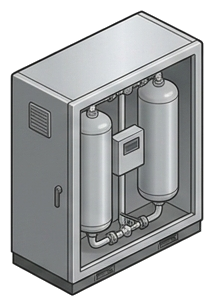
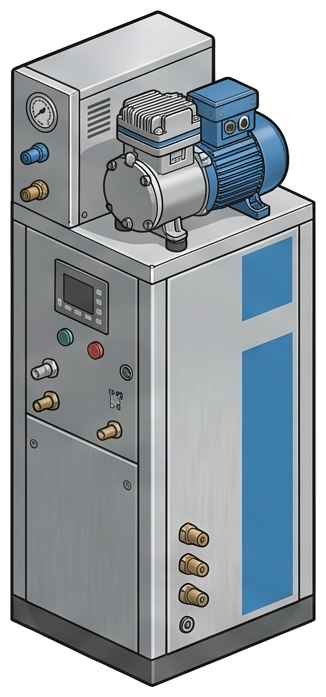
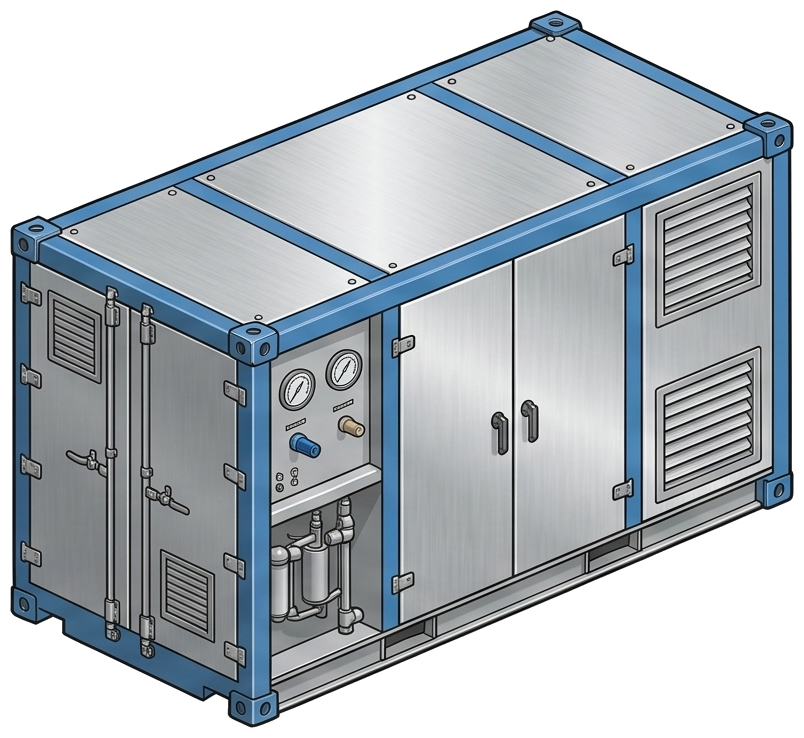
Three formats, one PSA core, one decision. Where is the nitrogen consumed — at plant pressure, in cylinders, or on a remote site with no building? This page walks the standard plant generator, the high-pressure cylinder-fill system, and the containerized turnkey package — comparison first, decision tree second, questions to ask third — so a vendor-supplied gas line item turns into an on-site capital asset with a calculated payback.
Tap any type to jump to its page. The Decision Guide further down asks three questions that funnel the spec to one of these.
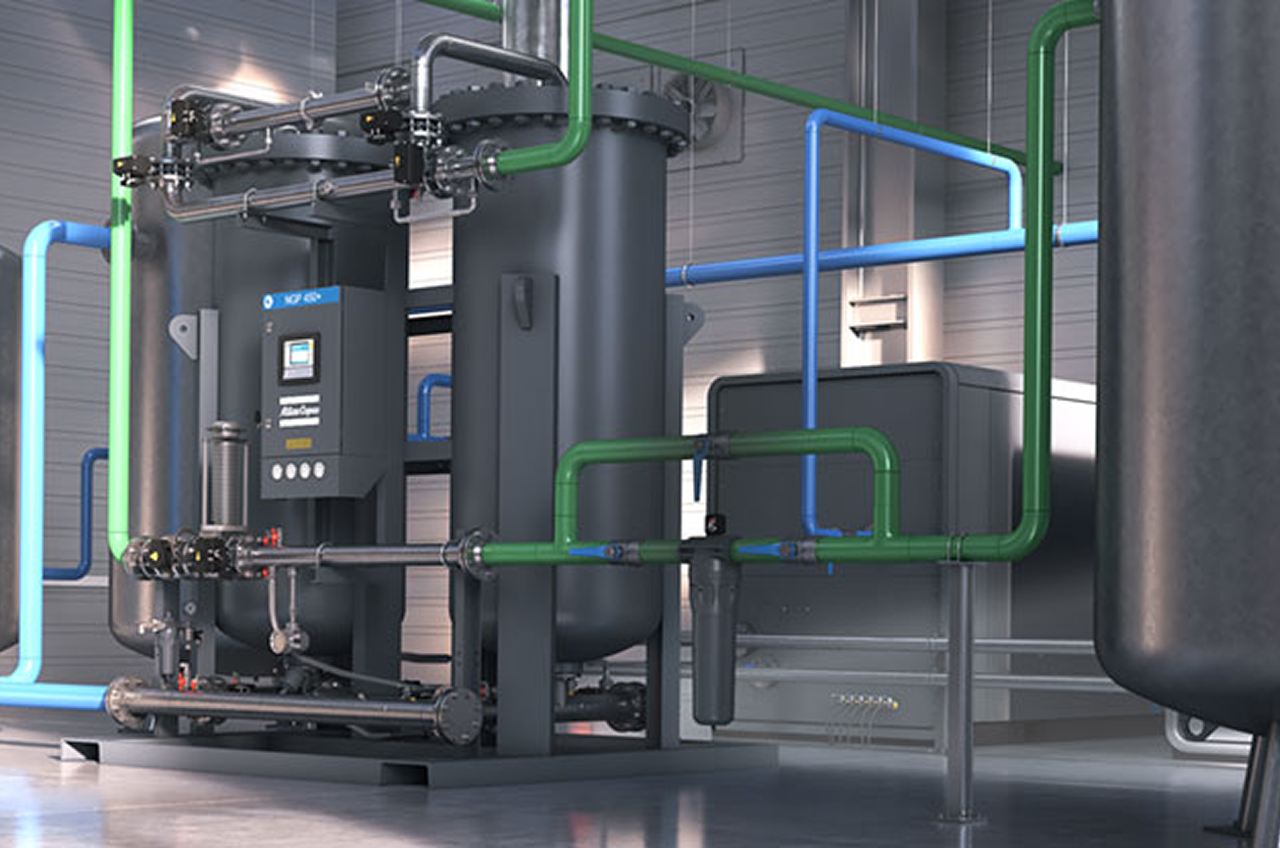
One PSA core — carbon molecular sieve takes oxygen out, nitrogen passes — in three formats. The air you already make becomes a process gas.
At plant pressure (standard generator), in cylinders (high-pressure fill system), or on a remote site with no building (containerized).
Required purity, peak flow, and current monthly nitrogen spend. Size to peak, never average — the buffer smooths swings but doesn't erase them.
A line item the customer buys every month becomes an owned generator with a calculated payback — often 18-30 months at steady spend.
Desiccant dryer to ‑40°F PDP plus a coalescing filter, on every format. A refrigerated dryer destroys the CMS beds in months, not years.
Every PSA install needs the dryer, coalescing filter, buffer vessel, and on-line purity analyzer — selling the generator alone misses spec.
Distributor-facing reading. The trade-off column is the one that closes the loop — every type buys something and gives something up. Knowing what each type costs you is how the right one gets on the quote without a callback.
Reading the brand bench column — the bar shows how many of SPC's tier slots (Industry Leader · Emerging · Economical · adjacent) carry an option at that product type. A deep bench means a price-driven and a spec-driven option both close cleanly; a narrow bench means the available brands map closely to the technical requirements and the comparison stops being a tier choice. Nitrogen generation runs narrow by design — South-Tek anchors every format, with Ozen Air and Great Lakes Air as second-tier alternates only on the standard-pressure format.
Draw a line from the customer's answer at the top to the type name at the bottom. This is the page distributors screenshot and send to a customer the day before a quote call — so the customer comes prepared with the answers, and the call is about the brand and the budget, not the basics.
Three structural rules behind the tree: feed-air treatment is not optional — a desiccant dryer to ‑40°F PDP plus a coalescing filter upstream of every PSA install, on every format (refrigerated dryers destroy CMS beds). Size to peak, never average — the buffer vessel smooths swings but does not erase them, and a generator that can't hit peak ends in supplemental cylinder deliveries that erode the payback case. Quote the system, not the generator — every PSA install needs the dryer, the coalescing filter, the buffer vessel, and the on-line purity analyzer; selling the generator alone leaves the customer with capital that can't hit spec.
The format is decided by where the nitrogen leaves the system — plant pressure, cylinder pressure, or remote site. After that, every PSA sizing conversation is the same three numbers: purity, peak flow, monthly spend.
End-Use is the layer where compressed air stops being compressed air and becomes something else — nitrogen, vacuum, pneumatic motion, the actual output the plant was built to produce. Every layer upstream of this one exists to deliver clean, dry, properly-pressured air to this boundary; everything downstream of this boundary is whatever the customer is making or doing with that air. Nitrogen Generation is the canonical End-Use add-on inside the compressed-air system: the same air the plant already produces gets pushed through a carbon-molecular-sieve PSA generator, oxygen comes off, nitrogen stays, and what was a utility becomes a process gas the customer used to buy from a vendor. Get the End-Use spec wrong and the upstream investment is wasted — the dryer, the filters, the compressor are all sized to feed this layer, and an undersized feed-air chain shows up as a generator that can't hit purity or a vacuum pump that can't hold draw. Get it right and the customer captures every dollar the upstream layers were engineered to enable. End-Use is also the bridge to the broader pneumatic ecosystem — vacuum, pneumatic automation, and other add-on systems pick up where this layer ends.
The canonical End-Use add-on inside the compressed-air system — turns the air you already make into on-site nitrogen at the format the application demands.
Tell us the end-use, the rough flow, and what climate the unit would sit in. We'll come back with a configured quote — the right type, the right tier, and the upstream gear the warranty assumes.
—. We reply within one business day with pricing, lead-time, and configured parts.